The American Extended Stay Lifestyle: A Strategic Professional’s Guide
The emergence of the mid-term residential model as a dominant force in professional mobility represents a fundamental shift in the American housing paradigm. For decades, the binary choice between a hotel stay—designed for consumption—and a long-term lease—designed for permanent residency—defined the boundaries of temporary living. The modern landscape, however, has dissolved these borders. Today, a growing segment of the workforce operates in a liminal space, characterized by residencies spanning months rather than days or years. This professional fluidity is not merely a logistical necessity; it is a structural transformation of how people interact with the built environment.
Navigating this reality requires more than just logistical competence; it demands a strategic orientation toward housing as a high-performance asset. The professional who masters the mid-term experience treats their environment as a critical component of their output, balancing the need for physical stability with the imperative for location-based flexibility. When this balance is achieved, the results are significant: improved professional focus, reduced administrative friction, and the ability to leverage diverse urban economies. Conversely, when the residency is treated with the same heuristics applied to a vacation rental, the result is almost always a compounding series of operational failures.
This analysis examines the systemic evolution of this lifestyle, deconstructing the hidden costs and hidden risks that define the experience. By shifting the focus from aesthetic appeal to operational utility, we provide a rigorous framework for evaluating, securing, and maintaining a high-performance residency. The goal is to move beyond the superficial metrics of the rental market, fostering a deeper understanding of how to construct a stable, productive, and adaptable existence in a landscape defined by movement.
Understanding American Extended Stay Lifestyle
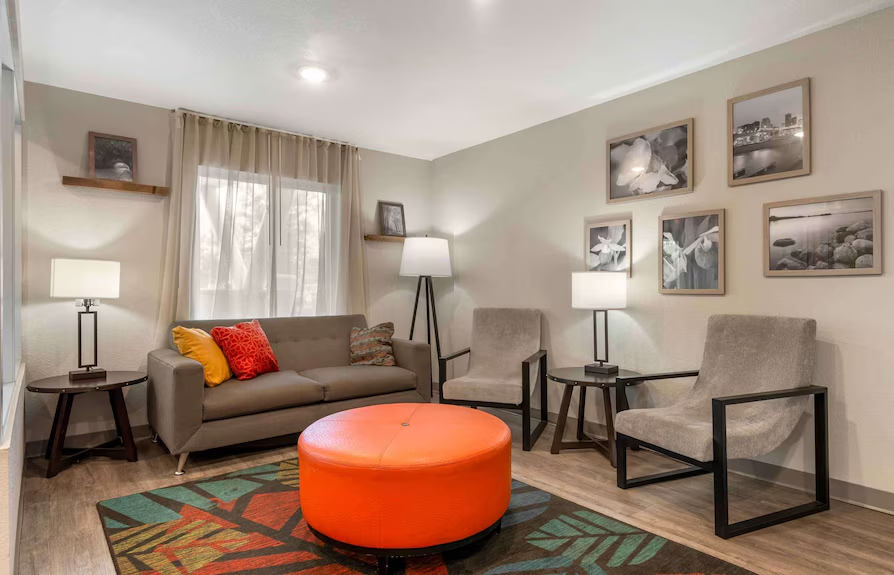
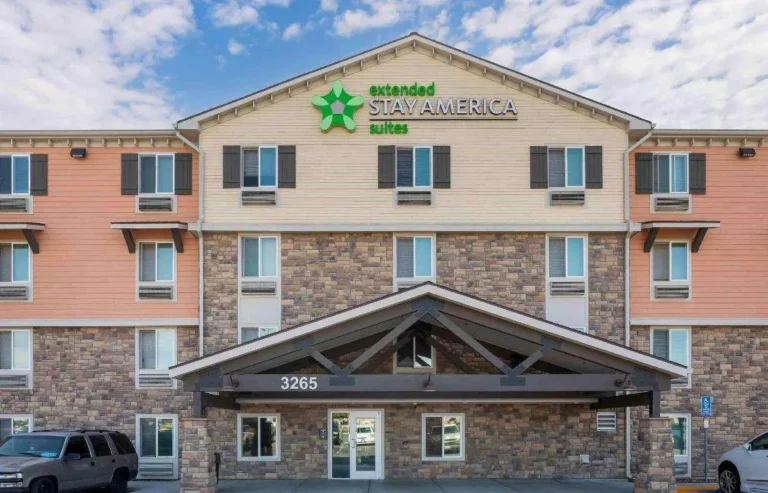
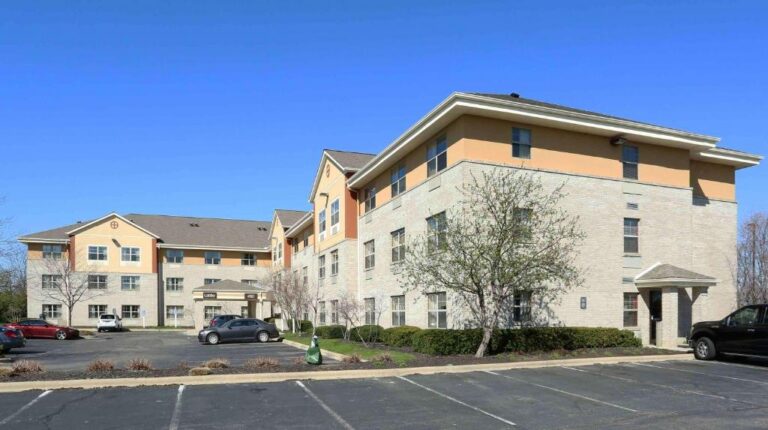
To understand the american extended stay lifestyle, one must look past the marketing narratives that emphasize “freedom,” “flexibility,” and “curated experiences.” While these elements exist, they are secondary to the underlying operational reality. At its core, the mid-term residency is a procurement project. It is the act of sourcing, securing, and maintaining a high-performance environment within an urban system designed for either extreme transience or extreme permanence. The failure to recognize this distinction is the primary cause of dissatisfaction among professionals who attempt to transition to this model without a robust operational plan.
A common misunderstanding is the assumption that the modern housing market is uniform in its service delivery. In reality, the sector is deeply fragmented. One property may be optimized for hotel-style service, another for residential autonomy, and a third for corporate efficiency. Mistaking one for the other leads to mismatched expectations. For instance, a resident who expects hotel-grade maintenance but signs an apartment-style lease will find themselves perpetually frustrated by slow response times and administrative hurdles. Conversely, a resident who requires residential privacy but selects an extended-stay hotel will feel exposed and constantly disrupted by the rhythms of transient tourism.
Furthermore, oversimplification is a major risk factor. It is easy to view the residency as a static transaction: payment for shelter. This view ignores the reality that the residency is a dynamic, living system. Factors such as regional energy infrastructure, local neighborhood noise profiles, and the specific contractual obligations of the property management firm all exert pressure on the resident. Mastering the american extended stay lifestyle requires a shift toward an audit-heavy, zero-trust approach. By rigorously interrogating the property’s capabilities, the resident mitigates the risks that plague the unprepared and ensures their living environment functions as a foundation for professional success rather than an ongoing maintenance project.
The Systemic Evolution of Residential Asset Procurement
The shift toward longer temporary stays was not an accidental development but a structural response to the decoupling of employment from location. As project-based assignments, consulting, and distributed team structures gained traction, the traditional corporate housing industry proved too rigid, while the informal short-term rental market proved too volatile. The resulting vacuum was filled by professionalized, high-end serviced apartment firms and tech-enabled property managers.
This evolution has created a “middle market” that is technically sophisticated but often lacks the historical oversight of traditional residential leasing. For the resident, the landscape is now defined by algorithmic pricing, standardized digital contracts, and property management systems that prioritize operational throughput. Understanding this evolution is crucial. The properties are no longer managed by landlords; they are managed by systems. Engaging effectively with these systems requires a technical, rather than social, approach to negotiation and conflict resolution.
Conceptual Frameworks for Residency Governance
1. The Performance-Asset Framework
Residents must categorize all housing components as either “Performance-Critical” or “Non-Essential.”
-
Performance-Critical: Reliable ISP-independent connectivity, acoustic isolation, HVAC performance, and building access security.
-
Non-Essential: Aesthetic decor, on-site gym frequency, lobby design, and neighborhood social programming.
True effectiveness is found by sacrificing non-essential aesthetic value to secure performance-critical infrastructure.
2. The Asymmetric Information Heuristic
Recognize that the property management firm always possesses more data regarding the building’s faults than the resident. The resident’s objective is to bridge this information gap through aggressive, pre-booking technical interrogation. Ask for the building’s age, last major utility overhaul, and specific network architecture before committing.
3. The Institutional Zero-Trust Model
Assume that any property marketed as “all-inclusive” has hidden performance trade-offs. The “inclusive” label frequently masks throttled internet, low-quality energy appliances, or delayed maintenance. Audit the property as if you were moving in for two years, not two months.
Taxonomy of Extended-Stay Models
| Model | Primary Orientation | Best Performance Context |
| Institutional Serviced | Predictable/Corporate | High-stakes project work |
| Boutique Residential | Character/Integrated | Creative/Consulting work |
| Adaptive Reuse | Architecture/Urban | Mid-term integration |
| Tech-Enabled Managed | Scalable/Autonomous | Mobile professional hub |
Choosing the correct model requires evaluating the management firm’s core competency. Does the firm specialize in hospitality or housing? The difference dictates the quality of their maintenance and support systems.
Real-World Scenarios and Decision Logic
The Consultant in a Historic Urban Core
A professional requires a four-month residency in a city with significant legacy infrastructure. The primary constraint is network stability within thick-walled historic buildings. The decision logic is to skip properties that advertise “inclusive Wi-Fi” and instead secure a unit where the lease specifically allows the resident to install a dedicated, hardwired line. The second-order effect is a 50% improvement in connection reliability compared to the building’s default service.
The Corporate Hub Strategy
A team leader manages operations across three cities. The strategy is to build a recurring relationship with a single, high-performance property management firm in each location. By standardizing the booking and maintenance request processes across these firms, the resident reduces the cognitive load of relocation to near-zero. The failure mode is attempting to “optimize” for the lowest rent each quarter, which instead introduces constant new-building-integration risk.
The Infrastructure Audit Failure
A resident books a high-design boutique property. Within two weeks, the building’s central climate control system fails. The resident is trapped in a multi-week repair cycle. The failure here was the lack of a “building-system redundancy” check. The decision point should have involved asking the management firm for the specific age and service history of the property’s HVAC and plumbing systems.
Dynamics of Cost, Time, and Resource Management
| Cost Factor | Nature of Variability | Management Strategy |
| Direct Rent | High (Market-driven) | Negotiate multi-property volume rates |
| Indirect Friction | Medium (Management-driven) | Pre-audit maintenance logs |
| Opportunity Cost | High (Downtime-driven) | Hardened local backup systems |
| Resource Drain | Low (Personal-driven) | Standardized packing/logistics |
Success is defined by minimizing indirect friction costs. These costs—time spent waiting for repairs, dealing with network outages, or managing service disputes—often exceed the nominal cost of the rent itself.
Tools, Strategies, and Support Systems
-
Professional Audit Templates: Standardized forms for evaluating unit infrastructure, including noise, light, connectivity, and utility efficiency.
-
Redundancy Hardware: Portable routers, high-gain antennas, and noise-canceling physical barriers that reside in your luggage and are deployed upon arrival.
-
Third-Party Advocacy: Utilize professional housing coordinators who have the leverage to force property managers into responsiveness.
-
Documentation Logs: A secure, time-stamped digital record of all maintenance requests, which acts as evidence for deposit protection or contractual enforcement.
-
ISP Negotiation Riders: Pre-drafted clauses for rental agreements that guarantee the right to independent network installation.
Risk Landscape and Failure Modes
The primary risk in the american extended stay lifestyle is “management drift.” This occurs when a property management firm’s service level degrades over time due to staff turnover or the prioritization of new, shorter-term revenue streams. This risk is compounded by the resident’s tendency to adapt to sub-optimal conditions. The solution is active governance: treat the residency as a project that requires a formal review at the end of every 30-day period.
Governance, Maintenance, and Long-Term Adaptation
-
The Review Cycle: Schedule a recurring, 30-minute monthly review of the residency. Is the property still providing the value and service level defined in the initial agreement?
-
Escalation Thresholds: Define clear triggers for action. If a maintenance issue remains unresolved after 48 hours, the resident should move to a formal written escalation.
-
Systemic Hardening: Proactively update the unit’s infrastructure as needs change. Never assume the management firm will provide upgrades; always negotiate the right to perform them yourself.
Measurement, Tracking, and Evaluation
-
Leading Indicators: The speed and technical precision of the management firm’s responses during the initial inquiry stage.
-
Lagging Indicators: Total effective cost (including unplanned personal expenditures), frequency of maintenance requests, and overall impact on professional output.
-
Documentation Example: The “Residency Performance Dossier” includes copies of all communications, a running log of system failures, and a summary of performance against the original contract.
Common Misconceptions and Strategic Corrections
-
Myth: “All-inclusive means stress-free.” Correction: Often, “all-inclusive” is a marketing term used to hide poor infrastructure. Demand an itemized service guarantee.
-
Myth: “Design correlates with quality.” Correction: Design is for the eye; infrastructure is for the work. Audit the mechanical systems, not the wall art.
-
Myth: “Review scores are reliable.” Correction: Reviews are written by transient guests. They are irrelevant to the long-term reality of a 90-day stay.
-
Myth: “The property manager is the authority.” Correction: The lease is the authority. Understand your contractual rights to ensure compliance.
Final Synthesis
Mastering the american extended stay lifestyle is not about finding the perfect property; it is about developing the capability to govern any property effectively. It requires a fundamental move away from consumerist behavior and toward the disciplined application of professional procurement and management practices. As the workforce continues to decouple from traditional office and residential norms, the residents who thrive will be those who treat their living environment as a strategic asset. By maintaining control over the technical, legal, and operational aspects of the residency, the professional creates a foundation of stability in a landscape of constant motion, ensuring that their living environment is an engine for, rather than an obstacle to, their professional objectives.