Best Scenic Extended Stay United States: A Professional’s Strategic Guide
The pursuit of an extended residence in a high-scenery environment is often mistakenly categorized as a leisure-focused endeavor. This perspective overlooks the profound impact that a curated landscape exerts on cognitive performance, creative output, and systemic recovery. For the modern professional—particularly those operating in distributed or project-based roles—the environment is not merely a backdrop; it is an active variable in the production of value. When a residence is placed within an exceptional natural context, it facilitates a shift from reactive, time-compressed work to a mode of deep, sustained cognitive engagement.
However, the intersection of scenic geography and long-term infrastructure is fraught with structural instability. The most visually arresting locations in the United States are frequently located in areas that lack the logistical robustness required for a high-performance extended residency. A property that offers panoramic mountain views but suffers from chronic ISP instability, erratic climate control, or distance-induced maintenance delays is fundamentally flawed for the working resident. The challenge, therefore, lies in harmonizing the aesthetic imperative with the rigorous requirements of professional continuity.
True mastery of this procurement process requires a departure from traditional travel heuristics. It demands a transition toward the mindset of an infrastructure auditor who happens to prioritize natural vistas. By decomposing the scenic residence into its component parts—network resilience, site management, utility autonomy, and psychological performance—one can bypass the surface-level marketing of the hospitality industry. This analysis outlines the framework for identifying and managing residences that function not merely as locations, but as strategic assets for the professional resident.
Understanding best scenic extended stay united states
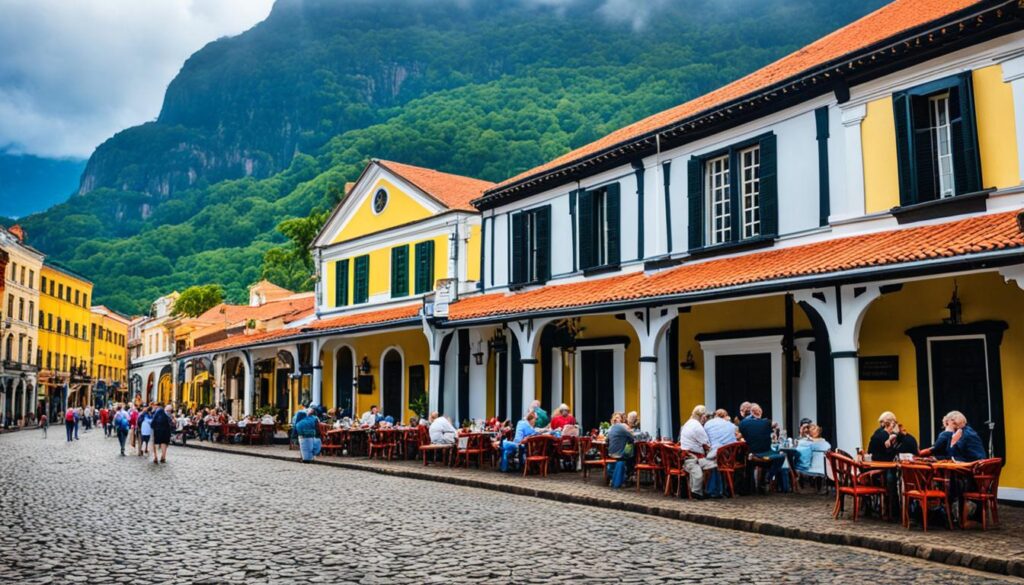
To identify the best scenic extended stay united states options, one must first dismantle the conflation between “scenic” and “secluded.” A property can offer a superlative view while being entirely integrated into a high-speed, well-managed urban or peri-urban node. The common error is the prioritization of visual access at the expense of infrastructure stability. High-performing individuals who seek these stays often find that their professional output degrades in tandem with poor network latency or unreliable utility uptime. Consequently, the “best” residency is the one that successfully maximizes the landscape’s psychological benefits without compromising the functional requirements of the resident’s workflow.
A secondary misunderstanding is the assumption that the quality of a scenic residence is a static property of the building. In reality, the quality of a stay is an emergent property of the management firm’s operational maturity. A world-class view is rapidly negated by a management team that is unable to resolve a critical system failure within a 24-hour window. Professionals seeking these stays should focus their due diligence on the management firm’s operational history, specifically looking for evidence of institutional-grade service in geographically challenging environments.
Furthermore, oversimplification of the budget-planning process remains a pervasive failure mode. Many residents plan based solely on the nightly or monthly rent, ignoring the substantial “friction costs” associated with operating a long-term residency in a scenic, remote, or semi-remote location. These costs include logistical overhead, auxiliary hardware investments to bolster internet or climate control, and the opportunity cost of time spent managing unforeseen maintenance. An accurate analysis of the best scenic extended stay united states incorporates the total cost of occupancy (TCO), providing a clearer view of the actual investment required to sustain the lifestyle.
The Systemic Evolution of Residential Asset Procurement
The professionalization of mid-term housing represents a significant shift from the historic paradigm of the “seasonal vacation rental.” This evolution has been driven by the rise of remote-work infrastructure and the increasing recognition that the environment acts as a cognitive lever. As the demand for scenic, extended-duration housing has scaled, the supply side has bifurcated into two distinct tracks: the institutionalized corporate rental and the boutique-managed property.
The institutionalized track offers uniformity and technical support but often struggles to provide the bespoke aesthetic or landscape integration that professionals seek. Conversely, the boutique track excels in site selection and atmosphere but frequently lacks the technical redundancy needed for a high-intensity work environment. Navigating this evolution requires the resident to function as an integrator—selecting a property that offers the ideal landscape, then proactively layering in the technical systems (such as high-end hardware, independent monitoring, and specialized logistics) to transform the property into a high-performance hub.
Conceptual Frameworks for Residency Governance
1. The Cognitive-Performance Matrix
Every residence should be evaluated based on the net benefit to cognitive performance, accounting for both sensory input and operational friction.
-
High Performance: Strong connectivity, ergonomic support, low-friction maintenance, and inspiring vistas.
-
Moderate Performance: Strong connectivity but moderate friction or weak landscape integration.
-
Low Performance: High aesthetic value but high friction (e.g., connectivity issues, slow management responses).
The objective is to avoid Low Performance properties regardless of their scenery.
2. The Zero-Trust Infrastructure Audit
Never assume that the marketing collateral’s promises regarding service—such as “high-speed internet”—reflect the reality of the property’s current technical status. Implement a standard audit protocol that measures latency, power stability, and sound levels upon arrival. Use this data to negotiate adjustments or to trigger an exit plan if the property fails to meet predefined standards.
3. The Lifecycle Management Model
Mid-term residencies are not static assets; they are temporary systems that require active maintenance. A resident must adopt a 30-day “Governance Review” cycle to assess whether the property is meeting its technical and aesthetic requirements. This ensures that the residency remains optimized for the duration of the stay.
Taxonomy of Extended-Stay Models
| Model | Characteristic | Primary Strength | Primary Risk |
| Institutional Managed | Predictable service | Reliability | Lower landscape character |
| Independent Serviced | Aesthetic/Landscape | High “scenic” quality | Service inconsistency |
| Adaptive Heritage | Architectural/Cultural | Unique environment | Technical retrofitting |
| Managed Luxury Suite | High-end hospitality | Ease of operation | High cost/Low privacy |
The resident’s decision logic must prioritize their current project requirements. If a critical delivery deadline is pending, prioritize institutional reliability over landscape character. If the assignment is focused on creative incubation, landscape integration becomes the primary driver.
Real-World Scenarios and Decision Logic
The Distributed Software Engineer
A project lead requires a 60-day residency in a mountainous region with high-speed, stable fiber connectivity. They avoid the temptation of a generic vacation cabin and instead target a professionally managed residence near a regional tech-hub node that also offers high-elevation views. The failure mode here is selecting a remote property where the infrastructure relies on a single-point-of-failure satellite connection, which would render the resident unable to participate in team operations during inclement weather.
The Strategic Consultant
A consultant requires a high-scenery environment for intensive, multi-week document drafting. They choose a residence that offers high-performance acoustic isolation and dedicated, ergonomic workspace. The decision point is the addition of a secondary, carrier-agnostic mobile data backup, ensuring that the scenery-induced isolation does not result in digital detachment during peak workload phases.
The Research Academic
An academic in need of a three-month retreat selects an adaptive-heritage residence in a coastal setting. They prioritize access to a high-quality, local professional network and reliable on-site climate control. The second-order effect of this choice is a significant increase in writing output, as the environmental stability allows for deeper cognitive focus compared to their primary metropolitan residence.
Dynamics of Cost, Time, and Resource Management
| Cost Variable | Primary Driver | Management Strategy |
| Connectivity Infrastructure | ISP/Building hardware | Portable hardware (Routers/Antennas) |
| Maintenance Friction | Management responsiveness | Formalized, written request logs |
| Climate/Environment | Building efficiency | On-site monitoring/Air treatment |
| Opportunity Cost | Downtime/Recovery | Predictive risk management (Exit clauses) |
Managing these variables effectively requires shifting from a passive “renter” mindset to an active “facility manager” approach. By documenting every service interaction, the resident builds a leverage point that ensures the management firm remains responsive throughout the duration of the stay.
Tools, Strategies, and Support Systems
-
Standardized Infrastructure Checklist: Use a 50-point checklist to evaluate every prospective property, covering everything from power-outlet proximity to the specific frequency bands supported by the local cellular tower.
-
Hardened Mobile Workspace Kit: Develop a high-efficiency hardware kit (laptop, noise-canceling peripherals, portable internet, and ergonomic support) that can be deployed instantly, regardless of the property’s existing facilities.
-
Local Professional Concierge: For long-term stays, identify a local, third-party professional who can handle the management of cleaning, maintenance, and supply replenishment, insulating the resident from property-manager friction.
-
Redundancy Protocols: Never rely on a single service provider. Maintain secondary, carrier-agnostic data backups and redundant power solutions (such as high-capacity external batteries).
-
Formal Documentation Records: Maintain a digital record of all maintenance logs, contract details, and communication with the management firm to protect your deposit and provide leverage in the event of a dispute.
Risk Landscape and Failure Modes
The primary risk in the best scenic extended stay united states model is the “Infrastructure Decay” phenomenon. A property that is maintained during the peak tourism season may fall into disrepair during the off-season, just as your long-term assignment begins. The management firm, distracted by staffing changes or revenue-maximization tactics, may overlook the minor systems—like climate control sensors or network-refresh cycles—that are vital for a long-term, professional-grade stay. Mitigate this by explicitly stating the technical requirements in the contract and reserving the right to request third-party verification of system functionality at any time.
Governance, Maintenance, and Long-Term Adaptation
-
The Governance Cycle: Treat the property as a managed asset. Conduct a performance review at the end of each month to ensure that the environment is meeting your specified requirements.
-
The Layered Checklist: Implement a checklist for every critical system in the residence. If a system fails, the checklist provides the basis for a formal, time-stamped report to the management firm.
-
Adjustment Triggers: Define the precise failure conditions under which you will initiate an exit, such as three consecutive days of internet-latency spikes or an unresolved climate-control failure.
Measurement, Tracking, and Evaluation
-
Leading Indicators: Response time to initial inquiries; the clarity and technical detail provided by the property manager during the booking phase; the stability of network ping tests performed during the site visit.
-
Lagging Indicators: Total effective cost (including unplanned upgrades and downtime-related losses); number of maintenance incidents; self-reported metrics regarding focus and writing/work volume.
-
Documentation Example: Maintain a “Residency Performance Dossier.” This document houses all communications, records, and site-infrastructure specifications, acting as the definitive technical reference for the stay.
Common Misconceptions and Strategic Corrections
-
Myth: “Higher nightly rates indicate better quality.” Correction: High prices often correlate with market demand for the view, not the technical maturity of the property’s management.
-
Myth: “You can always fix it once you arrive.” Correction: If the infrastructure—the building’s network or electrical design—is fundamentally flawed, you cannot fix it. You must audit it before booking.
-
Myth: “Property managers are your partners.” Correction: They are contractual service providers. Manage them with clear, professional expectations and formal documentation.
-
Myth: “You are limited to what the property provides.” Correction: You are limited only by your own initiative to supplement the property’s infrastructure with your own mobile, high-performance hardware.
Final Synthesis
Securing the best scenic extended stay united states residence is an exercise in infrastructure procurement and systems management. By shifting from a consumerist approach to an asset-governance mindset, the professional resident can leverage the psychological power of an exceptional landscape while maintaining the operational rigor of a metropolitan office. For those who invest in this level of preparation, the rewards are significant: a rare convergence of deep focus, environmental inspiration, and professional consistency that remains resilient regardless of the location.