How to Avoid Extended Stay Risks: A Professional’s Strategic Guide
The decision to relocate into a temporary housing environment is rarely treated with the same analytical gravity as the acquisition of a permanent home. However, the logistical, legal, and operational risks inherent in mid-term residency are significant, often compounding over time to create substantial personal and professional disruption. When you commit to a housing arrangement for weeks or months, you are essentially embedding your daily life into a foreign system of management, utilities, and local regulation. If that system fails, the consequences are immediate and often difficult to remediate.
Resilience in this context requires moving beyond the transactional comfort of booking platforms. A truly secure residency demands a strategic perspective that treats the living space as a critical piece of professional infrastructure. When you ignore the systemic vulnerabilities—such as the legal precariousness of certain rental models or the lack of technical redundancy in many serviced units—you leave yourself exposed to failures that can dismantle your productivity. This is not merely about finding a place to stay; it is about establishing a secure base of operations.
This guide provides a rigorous framework for identifying, analyzing, and mitigating the diverse hazards of extended-stay living. By examining the structural weaknesses common to temporary lodging and applying a proactive management model, you can build a residency that is resilient to the inevitable frictions of transient life. This requires shifting your mindset from that of a passive guest to an active project manager, ensuring that every aspect of your tenure is governed, monitored, and optimized for stability.
Understanding how to avoid extended stay risks
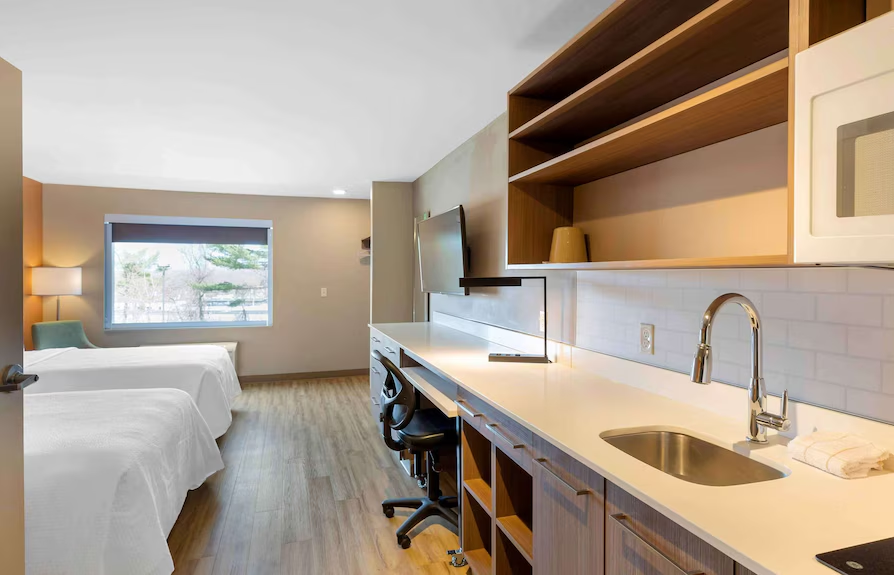
To understand how to avoid extended stay risks effectively, you must first move past the belief that these dangers are confined to “bad neighborhoods” or “poor hosts.” The true risks of temporary living are systemic. They reside in the gray areas of housing law, the fragility of property-managed infrastructure, and the inherent conflict between short-term turnover and long-term stability. A common misunderstanding involves viewing risk as a binary state—either safe or unsafe—when it is actually a spectrum of compounding probabilities. If you do not have a defined process for identifying these vulnerabilities before you sign a contract, you are essentially betting on the reliability of an entity that may not prioritize your continuity.
Furthermore, oversimplification of the risk landscape can be fatal to your professional success. Many residents assume that high-cost options are inherently safer. However, a luxury apartment managed by a firm with poor internal systems is often more prone to “management friction” than a simple, well-managed unit. You must learn how to avoid extended stay risks by conducting due diligence on the operator rather than just the property. This requires analyzing the company’s history, their responsiveness to maintenance requests, and their legal standing within the local housing market.
Finally, the risk of “information asymmetry” cannot be overstated. Property managers possess full visibility into the building’s history—the noise issues, the recurring utility failures, and the impending construction projects—while you possess almost none. Closing this information gap is the cornerstone of a secure residency. By demanding transparency regarding the property’s operational history and vetting the management’s communication protocols, you can transform your position from a vulnerable guest into a protected client.
The Systemic Evolution of Residential Vulnerability
The housing market’s shift toward “service-based living” has fundamentally altered the risk profile of the tenant. Previously, the legal protections of a standard residential lease provided a clear, if rigid, framework for stability. Today, the reliance on platform-based licensing, commercial service agreements, and unauthorized sublets has created a landscape where the occupant often lacks the basic protections of tenant law.
This evolution is not a temporary market quirk but a permanent change in how real estate assets are monetized. Owners are increasingly moving away from the regulatory burden of long-term tenancies in favor of shorter, higher-yield cycles. For the resident, this means that the “market” is constantly moving beneath your feet. You are operating in a sector that is increasingly volatile, and your residency is only as secure as the management’s commitment to operational stability over immediate financial gain.
Conceptual Frameworks for Risk Mitigation
1. The Operational Redundancy Model
Never rely on a single system for your core needs. If your work requires connectivity, your residency must include a primary, secondary, and tertiary internet solution. This model assumes that all local infrastructure will eventually fail.
2. The Legal Vulnerability Index
Calculate the “ease of eviction” for your residency type. A license-to-occupy agreement is legally weaker than a residential lease. When you choose a lodging type, you are choosing a specific level of exposure to legal displacement.
3. The Management Responsiveness Loop
Before committing, test the management’s reaction to minor inquiries. A firm that is slow to answer a simple question before you sign will inevitably be unresponsive when you have a genuine crisis during your stay.
Comparative Taxonomy of Lodging Models
| Lodging Model | Regulatory Risk | Infrastructure Reliability | Legal Protection |
| Corporate Suite | Low | High | Contractual |
| Residential Lease | Very Low | High | Statutory |
| Mid-term Rental | Moderate | Moderate | Limited |
| Coliving/Shared | High | Variable | Poor |
When you analyze how to avoid extended stay risks, focus on the “Legal Protection” column. The further down the table you move, the greater the burden of risk shifts from the operator to you.
Real-World Scenarios and Decision Logic
The Corporate Professional (Infrastructure Focus)
The resident requires 99.9% network reliability. If the building’s fiber fails, the professional suffers. The failure mode here is “infrastructure complacency.” You avoid this by having a cellular-backed router and a pre-verified coworking space within a 10-minute radius.
The Transitional Family (Legal Focus)
A family relocating for school must ensure their residency is not subject to a sudden, unexpected lease termination. The strategy here is to refuse any arrangement that is not backed by a local residential lease agreement, even if it carries a higher administrative burden.
The Urban Nomad (Regulatory Focus)
A nomad moving between cities often stays in neighborhoods that are currently being targeted by local authorities for “short-term rental crackdowns.” To avoid this, you must conduct a local regulatory audit to ensure your building is compliant with city ordinances.
Dynamics of Cost and Resource Management
Risk management is an investment. You must allocate a portion of your budget specifically to “security and redundancy.”
| Risk Factor | Cost of Mitigation | Impact of Failure |
| Connectivity Loss | Moderate | High (Productivity) |
| Sudden Eviction | High | Critical (Relocation) |
| Maintenance Delay | Low | Moderate (Quality of Life) |
By explicitly budgeting for these mitigation costs, you remove the emotional desire to “save money” by choosing a riskier property.
Tools, Strategies, and Support Infrastructure
-
Independent Connectivity: A dedicated, carrier-agnostic mobile hotspot is the single most effective tool for mitigating residential network failures.
-
Regulatory Vetting: Contact the local municipal housing authority to verify the building’s permits for mid-term residency.
-
Encrypted Data Storage: Maintain a cloud-based folder containing your lease, identification, and emergency contacts, accessible even if your personal hardware is lost or damaged.
-
Local “Ground-Truth” Networks: Engage with neighborhood forums. Local residents are the first to know about construction, crime, or management changes.
-
Standardized Audit Checklist: Before signing any contract, perform a walk-through using a checklist that covers water pressure, noise levels, and appliance function.
Risk Landscape and Failure Modes
Risk in temporary residency is cumulative. A small maintenance delay, if left unaddressed, becomes a management dispute; a dispute becomes a breakdown in the relationship; and a breakdown leads to a premature departure. The primary strategy to avoid these failures is “early exit capability.” Never sign a contract that traps you in a failing environment without a clear, pre-defined path for termination.
Governance, Maintenance, and Long-Term Adaptation
Treat your residence as a managed project.
-
The 30-Day Audit: Every month, verify that the unit’s condition and the building’s policies remain stable.
-
The Damage Log: Document the unit’s state on arrival and departure with timestamps. This is your primary defense against deposit theft.
-
Relationship Management: Keep a professional, arms-length relationship with building management. Over-familiarity often leads to a devaluation of your needs as a client.
Measurement, Tracking, and Evaluation
-
Leading Indicators: Time between maintenance request and acknowledgment; building occupancy changes; local regulatory news.
-
Lagging Indicators: Number of nights where residency was “compromised” (e.g., no water, no internet, excessive noise).
-
Documentation Example: Maintain a “Residency Performance Log” where you score the management’s responsiveness weekly.
Common Misconceptions and Strategic Corrections
-
Myth: “Positive reviews mean no risk.” Correction: Reviews are often written by people who stayed for two days, not two months. Ignore reviews and seek technical facts.
-
Myth: “The host is my partner.” Correction: The host is an entity with financial goals that may be incompatible with yours. Treat the relationship as a commercial contract.
-
Myth: “Everything is negotiable.” Correction: Legal terms and basic safety protocols should never be treated as negotiable.
-
Myth: “I am safe because I have a contract.” Correction: A contract is only as good as your ability to enforce it. In foreign jurisdictions, enforceability is often low.
Final Synthesis
Mastering how to avoid extended stay risks is a process of disciplined, preventative management. By treating the residency as a critical infrastructure asset rather than a lifestyle experience, you neutralize the volatility that most residents accept as inevitable. The objective is to build a system where the physical and legal foundations of your stay are redundant, compliant, and clearly defined. When you accept the reality that the lodging industry is prone to failure, you empower yourself to engineer a solution that remains stable regardless of the environment. Security in the mid-term market is not a luxury; it is the prerequisite for sustained professional and personal performance.