Top Extended Stay Reservation Plans: A Professional’s Strategic Guide
The contemporary professional landscape has fundamentally altered the requirements for temporary residency. For the consultant on a six-month engagement, the executive overseeing a regional launch, or the distributed team lead coordinating a multi-city project, the traditional hotel stay is no longer sufficient. These roles demand an environment that functions not merely as a place to sleep, but as a high-performance infrastructure—a site where productivity, physical restoration, and administrative stability must coexist. The transition from the “transient guest” model to the “resident-professional” model is the defining challenge of modern corporate mobility.
Procuring this environment is not a simple transaction of nightly rates. It is an exercise in resource deployment. A failure to recognize this leads to the most common pitfall in corporate housing: the treatment of a long-term residency as a short-term vacation booking. When the wrong selection is made, the result is a compounding series of operational failures—unreliable internet, inadequate ergonomic support, lack of on-site logistical backing, and the invisible, draining cost of managing domestic issues while attempting to maintain professional output.
This article provides a rigorous, analytical framework for the selection of extended stay solutions. By stripping away the marketing veneer of the hospitality industry and focusing on the underlying operational metrics—connectivity, utility autonomy, management response cycles, and site-specific risk—we provide a definitive guide for those who treat their housing as a strategic asset. The goal is to move beyond the search for “amenities” and toward the identification of a reliable, high-performance base of operations.
Understanding top extended stay reservation plans
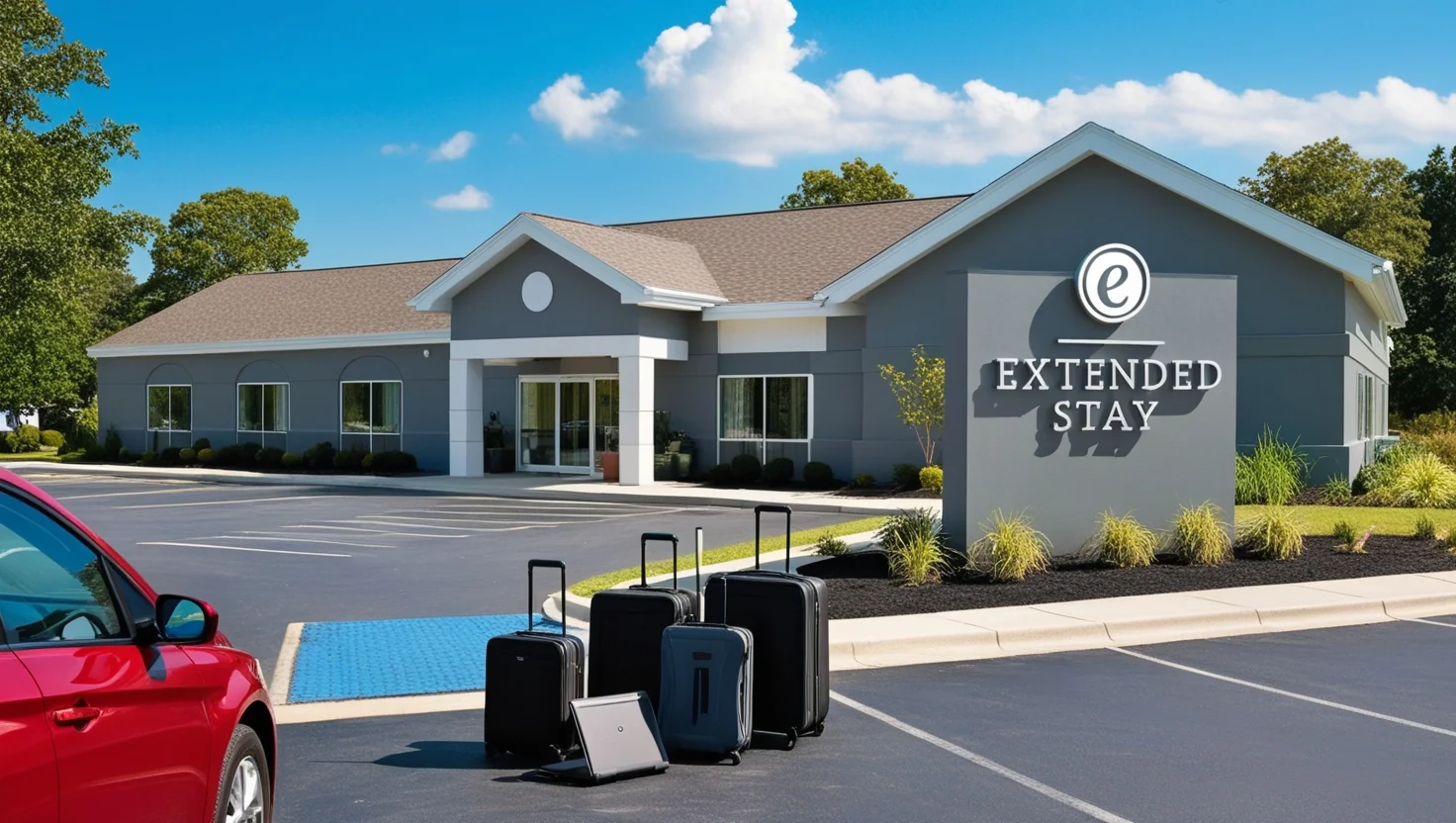
To identify the top extended stay reservation plans, one must first discard the standard consumer heuristic of “brand loyalty.” A high-end hospitality brand that excels in the short-stay, vacation-oriented sector may be fundamentally ill-equipped to support the operational requirements of a multi-month resident. The confusion arises because these programs often share similar nomenclature, yet their underlying service-level agreements differ vastly. A plan optimized for a three-day conference guest is, by definition, structurally incapable of serving the needs of a resident on a three-month technical assignment.
Common misunderstandings include the conflation of “serviced” with “supported.” A property that provides weekly cleaning is “serviced,” but it is not necessarily “supported” in terms of infrastructure. True support, in an extended-stay context, means the presence of internal systems designed to handle the specific stressors of long-term occupancy: power surges, network congestion, maintenance of kitchen and laundry facilities, and the security of stored equipment. Oversimplification—viewing these plans through the lens of a comparison table focusing solely on “daily rate” or “free breakfast”—is the most frequent cause of logistical failure.
To achieve a professional-grade residency, the evaluation process must prioritize technical and operational integrity over aesthetics. The most effective programs are those that provide clear, written guarantees regarding bandwidth, utility redundancy, and the escalation paths for facility-related disruptions. When these criteria are met, the reservation plan ceases to be a commodity and becomes a strategic partnership, allowing the resident to focus entirely on their professional objectives.
The Systemic Evolution of Residential Asset Procurement
The shift toward longer-duration temporary living was initially a response to the volatility of global business travel, but it has since evolved into a core component of the “distributed” economy. We have seen a professionalization of the market where housing providers now utilize the same predictive analytics as logistics firms to manage occupancy and maintenance. This shift has favored institutionalized providers—those capable of offering unified billing, centralized management, and standardized service across multiple geographic nodes.
For the resident, this means the procurement landscape is now dominated by data-driven algorithms. Prices adjust in real-time, availability fluctuates based on complex demand-forecasting models, and the “best” rate is often a function of the booking window and the specific property’s internal inventory goals. Mastering this new environment requires a move toward proactive procurement: securing inventory well in advance, negotiating volume-based terms if possible, and leveraging the administrative capabilities of centralized management platforms.
Conceptual Frameworks for Residency Governance
1. The Operational Friction Threshold
Define the maximum amount of time you are willing to spend “managing” your residence. If a residency requires more than two hours of maintenance-related interaction per week, the program has failed your performance requirements. This threshold acts as an immediate filter for evaluating potential partners.
2. The Infrastructure-First Audit
Prior to locking into any of the top extended stay reservation plans, demand specific, granular data. What is the average network latency at the unit? What is the building’s power redundancy policy? Is the unit outfitted with high-grade, ergonomic furniture? If the provider cannot furnish this, they are selling a lifestyle experience, not a professional facility.
3. The Lifecycle Management Model
Categorize your stay as “Integration,” “Execution,” or “Transition.” Each phase requires different levels of support. A residency plan that is excellent for the Integration phase (easy move-in) may be inadequate for the Execution phase (no technical support). Evaluate plans that offer a “layered” approach, allowing for different support levels based on the residency lifecycle.
Taxonomy of Residency Models
| Model | Primary Orientation | Best For | Operational Risk |
| Institutional Corporate | Predictable/Enterprise | Multi-month, high-stakes | Low flexibility |
| Tech-Enabled Managed | Scalable/Autonomous | Mobile professional hub | Variable quality |
| Boutique Residency | Character/Environment | Creative incubation | High maintenance lag |
| Hybrid Hotel-Suite | High-Support/Central | Unpredictable timelines | Noise/Transience |
Choosing the correct model is a matter of aligning the housing’s inherent “DNA” with the nature of your assignment. Do not attempt to force a “High-Support/Central” hotel-style unit to function as a quiet, secure research base.
Real-World Scenarios and Decision Logic
The Consultant’s Multi-City Sprint
A consultant needs to operate across three different urban centers over a single quarter. They prioritize a centralized corporate account with a provider that guarantees consistent unit layouts and connectivity standards across their entire portfolio. The secondary effect is that the resident’s “mental map” of their workspace remains identical, despite the geographic location.
The Technical Project Lead
A project lead requires a 90-day residency to oversee a sensitive hardware installation. They select a residence with a proven track record of handling high-speed data needs, even at a higher nightly rate than an “all-inclusive” hotel. The logic: the cost of a three-day connectivity failure exceeds the entire 90-day rent premium.
The Failure of “All-Inclusive” Assumptions
A resident books a highly rated unit, assuming “all-inclusive” covers everything from cleaning to utility management. Upon arrival, they find that the “inclusive” Wi-Fi is insufficient for secure VPN tunnels. The resident is forced to spend days installing a secondary line. The failure: a failure to perform a pre-booking network diagnostic.
Dynamics of Cost, Time, and Resource Management
| Resource Component | Management Strategy | Variability Factor |
| Rent/Membership | Volume/Pre-booking | High (Algorithmic) |
| Friction/Admin | Standardized escalation logs | Medium (Property-specific) |
| Infrastructure | Redundant, portable hardware | Low (Resident-controlled) |
| Setup/Teardown | Templatized logistics | Medium (Location-based) |
Success is defined by the reduction of “Friction/Admin” costs. These hidden drains on your time are the true cost of an extended stay. Track them as rigorously as you track your financial expenses.
Tools, Strategies, and Support Systems
-
Infrastructure Verification Kits: A portable setup of diagnostic tools to assess network and electrical stability within the first four hours of arrival.
-
Formal Escalation Protocols: A pre-written template for notifying management of systemic failures, emphasizing your contractual rights to a stable environment.
-
Cross-Platform Logistics: A central repository (a digital “master file”) for all reservation details, billing cycles, and site-specific service codes.
-
Third-Party Concierge Services: Retaining a local service coordinator to bridge the gap between you and the property management team, especially in high-barrier locations.
Risk Landscape and Failure Modes
The primary risk in managing these reservations is “management drift.” A property that provides excellent service in month one may deteriorate by month three as staff turns over or occupancy surges. Mitigate this by scheduling a “service review” at the 30-day mark. If the service quality is trending downward, trigger your contingency plan—whether that involves a formal demand for improvement or a planned relocation.
Governance, Maintenance, and Long-Term Adaptation
-
The Review Cycle: Schedule a 30-minute monthly audit. Are the unit’s core systems (HVAC, ISP, cleanliness) still meeting your performance benchmarks?
-
The Documentation Log: Maintain a running tally of every maintenance request. This data is your primary leverage if you need to negotiate a rate reduction or an early release from a contract.
-
Layered Checklists: Use a master checklist for every site. The first layer is the “arrival” audit; the second is the “weekly operation” review.
Evaluating Success: Metrics and Indicators
-
Leading Indicators: The responsiveness and technical competence of the property’s sales team during the initial inquiry.
-
Lagging Indicators: The number of hours spent on “troubleshooting” versus “production,” and the final total cost of residency (including auxiliary upgrades).
-
Documentation Example: The “Residency Performance Dossier,” which archives the contract, performance logs, and local emergency protocols for every site you visit.
Common Misconceptions and Strategic Corrections
-
Myth: “Higher stars mean higher reliability.” Correction: “Stars” signify amenities (pools, gyms), not infrastructure stability. Ignore the stars.
-
Myth: “The property manager wants me to be happy.” Correction: They want you to occupy the unit with minimal interaction. Their “success” is your lack of communication.
-
Myth: “Location is everything.” Correction: Location matters only if the local infrastructure is robust. A great location with a failing power grid is a bad choice.
Final Synthesis
Selecting the top extended stay reservation plans is an act of systems engineering. It requires the professional to move beyond the superficial comforts of the hospitality industry and embrace a role as the curator of their own environment. When you approach these reservations as an exercise in resource deployment, the residency becomes a foundation for stability, not a constant source of friction. By maintaining control through auditing, documentation, and proactive management, you create an environment that facilitates peak performance, regardless of how often or how far you travel. The future of professional mobility belongs to those who view their residence as an asset to be managed, not a hotel room to be booked.